Melanoma Diagnosis &
Surgical Care in Singapore
Specialist Evaluation & Surgical Treatment for Melanoma
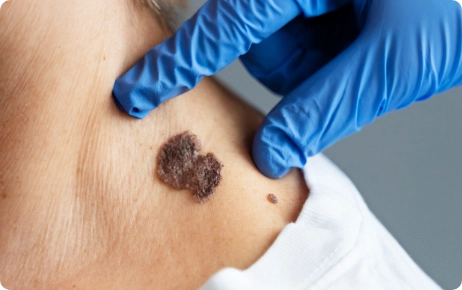
Melanoma is an aggressive form of skin cancer that originates in melanocytes—the cells responsible for producing skin pigment. While less common than non-melanoma skin cancers (like basal cell or squamous cell carcinoma), melanoma is significantly more likely to invade nearby tissues and spread to other parts of the body if not caught early.
At Melissa Teo Surgery and The Surgical Oncology Clinic, our surgical team provides comprehensive diagnosis, precision surgical excision, sentinel lymph node staging, and integrated multidisciplinary care.
Recognizing the Signs: What to Look For
Melanoma can develop anywhere on the body—either from an existing mole or as a new dark spot.
The ABCDE Rule for Moles:
A
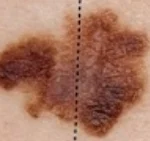
Asymmetry:
One half of the mole does not match the other.
B
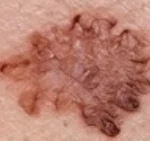
Border:
Irregular, ragged, notched, or
blurred edges.
C
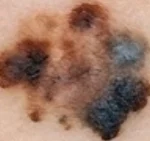
Color:
Uneven shades of brown, black, tan, red, white, or blue.
D
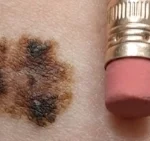
Diameter:
Greater than 6 mm across (about the size of a pencil eraser), though smaller melanomas can occur.
E
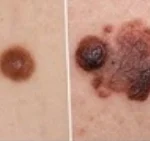
Evolving:
Any change in size, shape, color, or elevation, or new symptoms like bleeding, itching, or crusting.
Important for Asian Patients: Acral Lentiginous Melanoma (ALM)
Unlike Western populations where
sun-exposed skin is the primary site, patients in Asia frequently present with Acral Lentiginous Melanoma (ALM).
ALM occurs on skin that receives little to no sun exposure:
Soles of the Feet & Palms of the Hands:
Unexplained dark patches or changing moles.
Under Nails
(Subungual Melanoma):
A dark brown or black vertical streak beneath a fingernail or toenail that does not grow out with the nail.
Mucosa:
Rare instances in the mouth or nasal passages.

Key Takeaway: If you notice a dark line under your nail or a persistent, changing mark on the sole of your foot, seek specialist evaluation promptly.
Diagnostic & Surgical Treatment Options
Early-stage melanoma is highly curable with precise surgical removal. Our treatment strategy is tailored based on the depth (Breslow thickness) and stage of the tumor.
|
Stage |
Surgical Procedure |
Purpose |
|---|---|---|
|
Initial Assessment |
Excisional Biopsy |
Removal of the entire suspicious lesion for precise pathological verification and thickness measurement. |
|
Stage I & II |
Wide Local Excision (WLE) |
Removal of the biopsy site along with a specified safety margin of healthy tissue to ensure complete nearby tissue removal. |
|
Stage IB – II |
Sentinel Lymph Node Biopsy (SLNB) |
Identification and removal of the first “sentinel” lymph node to check for under the microscope cancer spread before visible swelling occurs. |
|
Stage III |
Lymph Node Dissection |
Complete removal of nearby lymph |
|
Stage III & IV |
Systemic Therapy & Surgery |
Combined treatment using modern Immunotherapy (e.g., PD-1 inhibitors) or Targeted Therapy (e.g., BRAF/MEK inhibitors). |
Why Choose Melissa Teo Surgery for Melanoma Care?

Surgical Oncology Expertise:
Both Prof. Melissa Teo and Dr. Grace Tan have extensive subspecialty training in complex skin and soft tissue surgical oncology.

Precision Lymph Node Mapping:
Routine utilization of advanced Sentinel Lymph Node Biopsy (SLNB) technique to minimize unnecessary radical node dissections.

Reconstructive & Functional Preservation:
Expertise in skin grafting and local tissue flap reconstruction, ensuring minimal scarring and preservation of function (especially on hands, feet, and face).

Multidisciplinary Cancer Care:
Close collaboration with medical oncologists, radiation oncologists, and dermatologists for advanced stage multi-modality treatment plans.